
Let's talk about the real problem
Desire mismatch isn't about one partner being broken. It's about two people with different rhythms, histories, hormones, and stress loads trying to sync up on something that doesn't follow a schedule. One person reaches for their partner at night. The other is already mentally scrolling tomorrow's to-do list. Then comes the silence. The sting. The quiet question: am I not wanted anymore?
This is where most couples get stuck. They treat desire mismatch like a mechanical problem. One partner suggests a lemon vibrator or another lemon clitoral vibrator, the other hears rejection, and suddenly everyone's more frustrated than before.
Here's what actually happens when you use a lemon vibrator to address desire mismatch the right way: you stop making your partner's pleasure your job. And weirdly, that's when closeness comes back.
The mismatch isn't actually about sex
Clinically, desire discrepancy shows up in about 35 percent of couples. But the gap isn't always what it looks like from the outside. Someone with a lower libido might have a higher capacity for pleasure once arousal starts. The partner with higher desire might feel rejected not because they want more sex, but because they're interpreting less sex as less love.
That's two different conversations happening in the same bed.
I've worked with couples where the "lower desire" partner was actually experiencing desire just fine. They were managing stress, taking medications that flattened arousal, or had simply never had permission to explore what they actually wanted. The moment they picked up something like the Lem by Hellanancy Lemons and figured out their own pleasure independent of their partner's expectations, desire magically evened out. Not because they wanted more sex with their partner. Because they stopped approaching sex as a performance they were failing at.
Why a lemon vibrator actually helps (but not how you think)
When desire is mismatched, both partners typically try harder. The higher-desire partner initiates more. The lower-desire partner feels pressured and pulls back further. Sex becomes homework neither person wants to do.
A lemon clitoral vibrator breaks that loop by taking the performance pressure completely off. Here's the pivot: instead of "we need to have more sex," the conversation becomes "what would you enjoy?"
That shift from obligation to curiosity changes everything.
For the lower-desire partner, using a lemon vibrator solo or with their partner present removes the "I have to orgasm quickly to keep my partner happy" anxiety. When you're not performing, arousal actually shows up. Orgasms deepen. Pleasure becomes real instead of theoretical.
For the higher-desire partner, watching their partner genuinely turned on shifts the frame from rejection to participation. They're not being refused. They're being invited to witness something real.
How to actually introduce this conversation
Do not say: "I think we need a vibrator to fix our sex life."
Do say: "I've been thinking about what I want for myself sexually, and I'd like to explore that. I want you to know what that looks like, if you want to be here for it."
Notice the difference. One makes it about fixing the relationship. The other makes it about claiming your own pleasure. One partner doesn't have to take responsibility for the other's sexual satisfaction. They just get to watch.
Then, if you're using a lemon vibrator together, the lower-desire partner stays in charge of tempo. They set the pattern, the intensity, whether they want their partner nearby or not. The higher-desire partner is there to witness, not to drive.
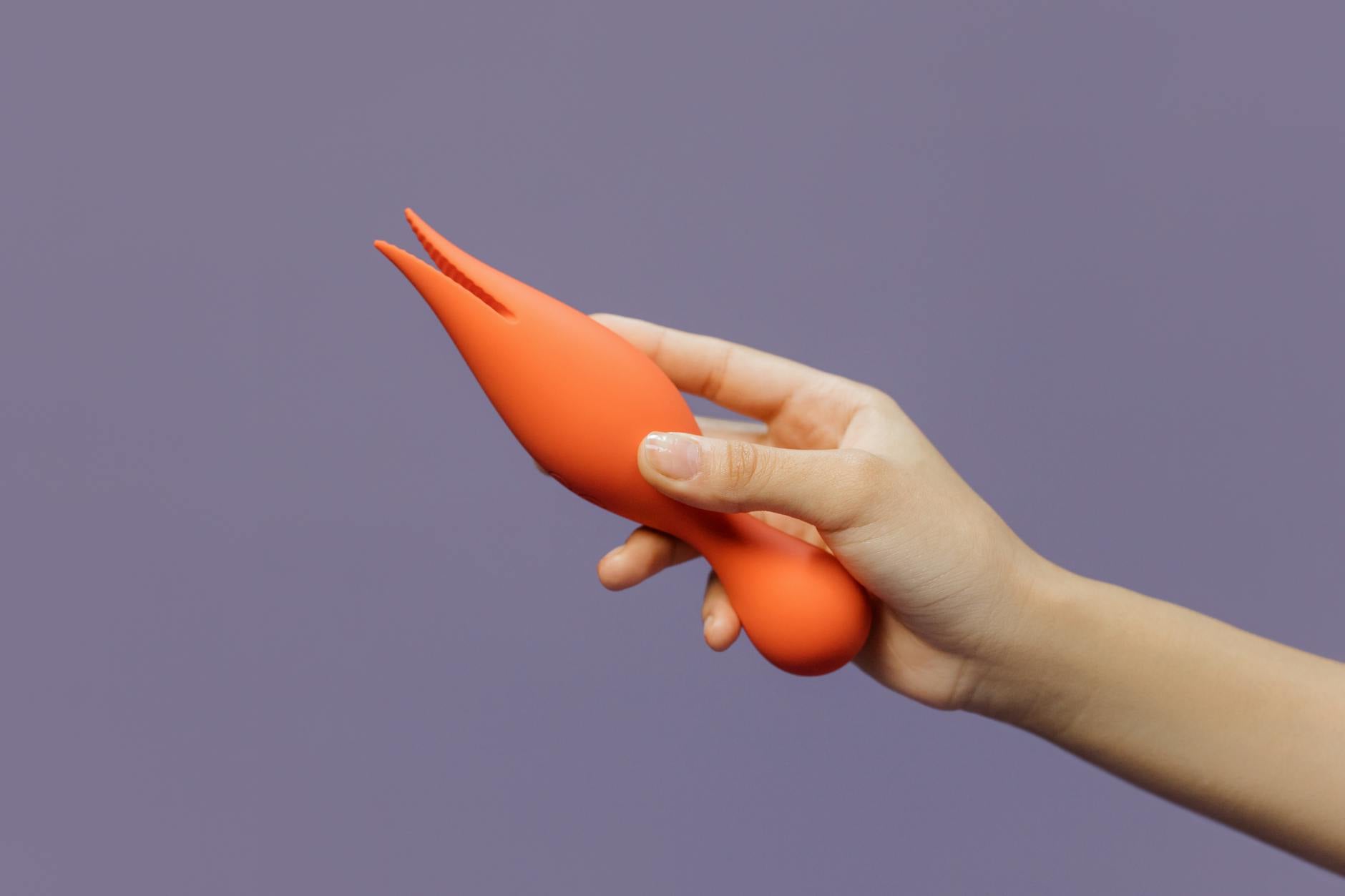
Photo by cottonbro studio on Pexels
This removes the negotiation entirely. There's no "do you want to now" or "can we try" or "I'm not in the mood but I'll try for you." One person is exploring their own body. The other gets to participate or not.
What actually happens to the mismatch
Honestly? It usually doesn't disappear completely. But it stops being a problem.
When both partners have a relationship with their own pleasure that's independent of their partner's needs, the comparison falls away. You stop keeping score. The person with higher desire stops feeling rejected because they're no longer making their partner's pleasure their responsibility. The person with lower desire stops performing and actually starts enjoying what they choose.
That reframe does something weird to libido. Sometimes the lower-desire partner's desire goes up. Sometimes it doesn't. But it stops mattering quite so much because it's not being weaponized by either person.
I had a couple in their mid-40s who came to me saying they were having sex maybe once a month, he wanted it three times a week, and she felt like a failure. We never talked about frequency. Instead, we talked about what turned her on when she was alone. What she'd always wanted to try. Whether she actually wanted sex with him or whether she was trying to want sex with him.
Turns out, she wanted plenty of pleasure. Just not the way their sex had been framed. Once she had a lemon vibrator and permission to explore solo, she started initiating with him about twice a week. Not because she suddenly wanted sex more. Because sex was no longer something she was doing wrong.
The conversation partners need to have (not about the vibrator)
Before you bring a lemon sexual toy into the relationship, talk about what desire mismatch actually means to each of you.
For one partner, less sex might feel like rejection. For the other, more sex might feel like pressure. Neither person is lying about their experience. They're just looking at the same situation from opposite angles.
The real question isn't "how can we have more sex." It's "what would it feel like to both be honest about what we actually want without it being a referendum on our love?"
That's where a lemon vibrator becomes useful. Not as a replacement for sex with your partner. But as a way of saying: "My pleasure doesn't require your participation. Your pleasure doesn't require mine. We get to choose each other beyond that."
When to seek outside help
If desire mismatch comes with resentment that feels stuck, or if one partner is using pressure or withdrawal as a way to control the other, talking about vibrators won't help. That needs a therapist.
If one partner is genuinely not interested in any sexual connection at all, and the other has high desire, that's a compatibility question, not a vibrator question.
But if you're in a good relationship where you're just mismatched on timing and frequency, a lemon vibrator is a practical, low-stakes way of separating two conversations that have gotten tangled up. It lets you both explore pleasure without it becoming a negotiation or a performance.
FAQ: Desire mismatch and using a clitoral vibrator
How do I bring up using a lemon vibrator without my partner feeling rejected?
Frame it as something for you, not something wrong with him or your relationship. "I want to explore what I enjoy solo" is completely different from "we need to fix our sex life." One is self-discovery. The other sounds like criticism. Lead with curiosity about your own pleasure, not concern about the mismatch.
What if my partner feels threatened by me using a vibrator?
That's worth exploring separately from the vibrator itself. Often, threat means someone is equating sexual pleasure with the relationship itself. A calm conversation helps: "This is about me learning what I like. It's not replacing you. It's about me having a fuller sense of myself." If that doesn't land, couples therapy can help untangle what's really underneath the threat.
Is it normal to have desire mismatch even in a relationship we love?
Completely normal. Desire is affected by stress, hormones, sleep, health, trauma history, medication, work, kids, aging, and about 50 other things that have nothing to do with how much you love your partner. A mismatch doesn't mean the relationship is broken. It means you're two people with different nervous systems trying to sync up.
Can using a lemon clitoral vibrator actually change how much I want sex with my partner?
Possibly. Not because the vibrator is magic, but because separating your pleasure from your partner's needs can remove the performance pressure that sometimes dampens desire. When sex stops being homework and starts being choice, sometimes appetite comes back naturally. But sometimes it doesn't, and that's also fine.
What if my partner wants to use a lemon vibrator during sex but I'm not ready?
That's a separate conversation from what the vibrator is for. If you're already feeling pressured, adding a toy might feel like more pressure. Start with solo exploration if that feels safer. Build familiarity. There's no rush.
How do I know if desire mismatch is a sign we're not compatible?
Desire mismatch alone isn't a compatibility killer. But if you both refuse to talk about it, or if one person uses it to withdraw love or control the other, that's a compatibility problem. The issue isn't the mismatch itself. It's whether you're both willing to be honest about it and find your own way through.
The actual goal
You're not using a lemon vibrator to solve desire mismatch. You're using it to get out of the frame where desire mismatch needs solving in the first place.
When both of you have a relationship with pleasure that belongs to you, desire stops being a scoreboard. It becomes just one way you sometimes connect. Not the only way you're loved. Not proof that the relationship is working or failing.
That shift from "why don't you want me" to "what do we each want for ourselves" is where real couples work happens. A lemon sexual toy is just the permission slip that says you're allowed to find out.
Want to explore solo pleasure as a way to rebuild confidence in your desire? Read about how to use a lemon vibrator when rebuilding sexual confidence after major life changes. Or, if mismatched desire stems from different initiation styles, this guide covers partner initiation differences in depth. If you're navigating desire questions with a new partner, this resource digs into that phase specifically.
Questions about how to start this conversation? Get in touch.