Let's talk about what actually happens
Here's what nobody tells you: aging and pleasure are not opposing forces. They're just different. Your sexual response changes. Your desire doesn't disappear. Your capacity for orgasm doesn't vanish. What shifts is the timeline, the intensity, the sensations themselves. And honestly, that's not failure. That's just information you need to work with, not against.
I work with couples and individuals navigating this transition constantly. The pattern I see most often isn't diminished pleasure. It's diminished confidence. People assume that because things feel different, they've done something wrong. Or that their partner has lost interest. Or that they're somehow past their expiration date. None of that is true. What's true is that your body is communicating new preferences, and you haven't learned to listen yet.
Why your body feels different
Tissue changes with age. Estrogen production shifts. Skin becomes thinner and more sensitive in some ways, less responsive in others. Blood flow takes longer to reach the clitoris. Recovery time between orgasms extends. None of this means your pleasure is broken.
Here's what often surprises people: many individuals report deeper, more nuanced orgasms after 50 than they ever experienced before. The orgasm might not hit like lightning. It might feel more like a wave, or a sustained intensity rather than a peak. Neither is worse. They're just different.

Photo by Madison Inouye on Pexels
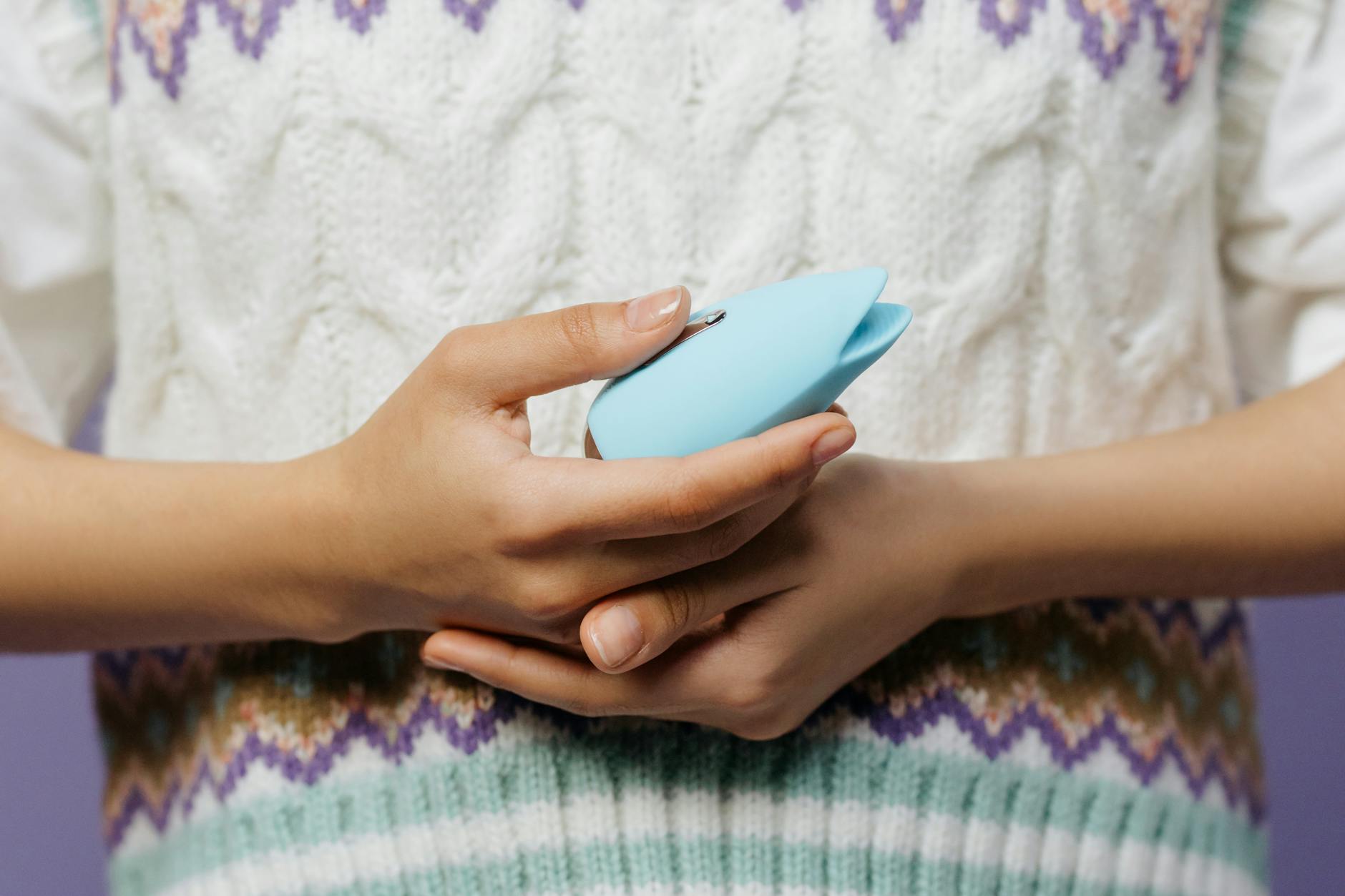
What also changes: confidence. You've spent decades learning how your body worked. Then one day, the rules shift. That can feel destabilizing. A lemon clitoral vibrator like the Lem isn't a workaround for a failing body. It's recognition that your body's preferences have evolved, and you deserve pleasure tools that match how you actually respond now.
The confidence factor nobody discusses
After a certain age, many people internalize a story that goes like this: "I'm not supposed to want this anymore." Or: "I'm too old for this." Or: "My partner won't find me attractive anyway." These aren't physiological facts. They're cultural narratives you've absorbed.
One of the most powerful things I've witnessed is someone in their 50s, 60s, or 70s giving themselves explicit permission to prioritize pleasure without apology. Not because they're suddenly horny or acting young. But because they've decided their body matters. Your sexual response matters. Your orgasm matters. Full stop.
A lemon adult toy is a practical tool, but it's also a statement: I'm worth the investment. My pleasure is real. I'm not settling for the memory of better sex. I'm building something new.
How aging changes what actually works
Four biological realities shift how you'll use a clitoral vibrator:
Arousal takes longer. You might need 20 to 30 minutes of warm-up instead of five. This isn't laziness or reduced desire. It's just how circulation and arousal hormones work as you age. Budget time. Make it part of the ritual.
Clitoral tissue is more sensitive and more easily overwhelmed. High intensity feels less like pleasure and more like overstimulation. A lemon sucker vibrator with variable patterns gives you control in a way older vibrators often don't. Start low. Build gradually. Your first instinct will be to push harder when nothing's happening. Resist that. Go slower instead.
Lubrication changes. Some people produce less natural lubrication with age. Others stay the same. Either way, a high-quality water-based lubricant becomes your friend, not a sign of dysfunction. It's just smart body mechanics.
Orgasm feels different. You might experience multiple smaller peaks instead of one big one. Or a longer sustained sensation. Or something that feels subtle but deeply satisfying. The orgasms you had at 25 aren't the gold standard. They're just what you had at 25.
Rebuilding confidence in three practical steps
Step one: Solo exploration. Before involving a partner (or if you're solo), take time alone with your body. Use a lemon vibrator in a low-pressure setting. Honestly, don't even try for an orgasm the first few times. Just explore sensation. Where does it feel good? Where is it too much? What patterns draw your attention? This is information gathering, not performance.
Step two: Release the timeline. If orgasm doesn't happen, that's not failure. Some days your body responds quickly. Other days it takes 45 minutes. Other days it doesn't happen and the pleasure was still worthwhile. All of these are normal. The goal isn't to optimize for results. It's to reconnect with sensation.
Step three: Communicate differently with your partner. Forget asking "Do you still find me attractive?" That's a yes-or-no that rarely helps. Instead: "I'm learning my body responds differently than it used to. I'm going to take some time exploring what feels good. I'd love your support." Then actually take that time. Let them know what you discover. Build new intimacy around the new reality instead of mourning the old one.
When to bring a partner in
If you're coupled, there's often an assumption that changes in your sexual response mean changes in your partner's attraction or your relationship. That's not necessarily true. What's true is that your partner has also been having the same experience: aging, changing bodies, shifting responses.
Many couples I work with actually reconnect sexually in their 50s and 60s because they finally stop performing and start communicating. You know yourself better. You're less worried about being judged. You're clearer about what you want. That's a powerful foundation for intimacy.
When you bring a clitoral vibrator into partnered sex, frame it clearly: "This is for me. This is how my body feels good now. You're still part of this. But this tool helps me access pleasure I'm having trouble reaching alone." That's not a statement of deficit. It's a statement of honesty.
Addressing the shame piece
Most of the work I do with people rebuilding sexual confidence after aging isn't about the mechanics. It's about dismantling internal resistance. The voice that says: "This is embarrassing." Or: "I should be able to do this without help." Or: "I'm too old for vibrators."
All of that is cultural noise, not truth. You're not too old. You're exactly the right age for a body that knows what it wants. A lemon clitoral vibrator is no different from glasses if you need them to see or hearing aids if you need them to hear. It's a tool that matches your current biology.
FAQ: Rebuilding Sexual Confidence After Aging
Does using a vibrator mean my partner won't satisfy me anymore?
No. Using a lemon vibrator is about understanding your own body better, not comparing your partner to a toy. Lots of people find that learning what they actually enjoy solo makes partnered sex better, not worse, because they can communicate more clearly. A vibrator is information. It tells you what feels good. That knowledge helps everything else.
Is it normal to need a longer warm-up time now?
Completely normal. Arousal physiology changes with age. Blood flow takes longer. Hormones shift. This isn't a personal failure. It's biology. Many people actually prefer longer warm-up because it feels less rushed and more intentional. You get to stay in anticipation longer, which can actually deepen pleasure.
What if I can't orgasm with a vibrator but I used to with one when I was younger?
Your body is different. Your nervous system is different. Your stress levels might be different. The vibrator you used years ago might also just not match how your body responds now. You're not broken. You're just using old information for a new body. A lemon vibrator with adjustable intensity and patterns gives you more options to find what works now. Expect to spend a few weeks experimenting.
Can aging decrease desire, or is it just decreased confidence?
Both happen, but they're separate issues. Hormone shifts can affect baseline desire. So can stress, medical conditions, and relationship dynamics. But a lot of what looks like decreased desire is actually decreased confidence masquerading as lack of interest. When you feel ashamed of your aging body or unsure about your sexual response, you stop initiating. That looks like low desire from the outside. From the inside, it's often just self-protection.
Should I tell my partner I'm using a lemon vibrator?
That's your choice, but honesty usually helps. If you're using it solo, that's your private experience. But if you're integrating it into partnered sex or if your partner might find it, conversation prevents assumptions and defensiveness. You might say something like: "I'm exploring what works for my body now. I'd love to include you in this, but I also need some solo time figuring it out." That's a vulnerable, honest conversation. Most partners respond to that.
What if my partner feels threatened by a vibrator?
That's worth exploring together. Often the threat isn't about the vibrator. It's about fear that you're losing interest, or that they're not enough. A conversation that addresses the real fear usually helps more than arguing about the toy. You might say: "This isn't about you. It's about me learning my body. I still want you. And I need this tool to feel good right now." If they're still resistant, that might point to a bigger relationship conversation worth having.
One more thing
Rebuilding sexual confidence after aging isn't about returning to how things used to be. It's about meeting yourself where you are now with curiosity instead of judgment. Your body isn't broken. It's evolved. A lemon clitoral vibrator is just a tool for reconnecting with sensation on your own terms. Give yourself time. Give yourself permission. Your pleasure still matters. It always has.
If you're navigating relationship shifts around sexuality and aging, you don't have to do it alone. <a href="/contact">Reach out</a> for support. We're here.